Machine 15Build a water wheel← → step through the guidetailrace · 3.75 m × 60 cm
Flow0 L/s
Wheel0.0 rpm
Blows0 /min
Per blow589 J
Power0 W
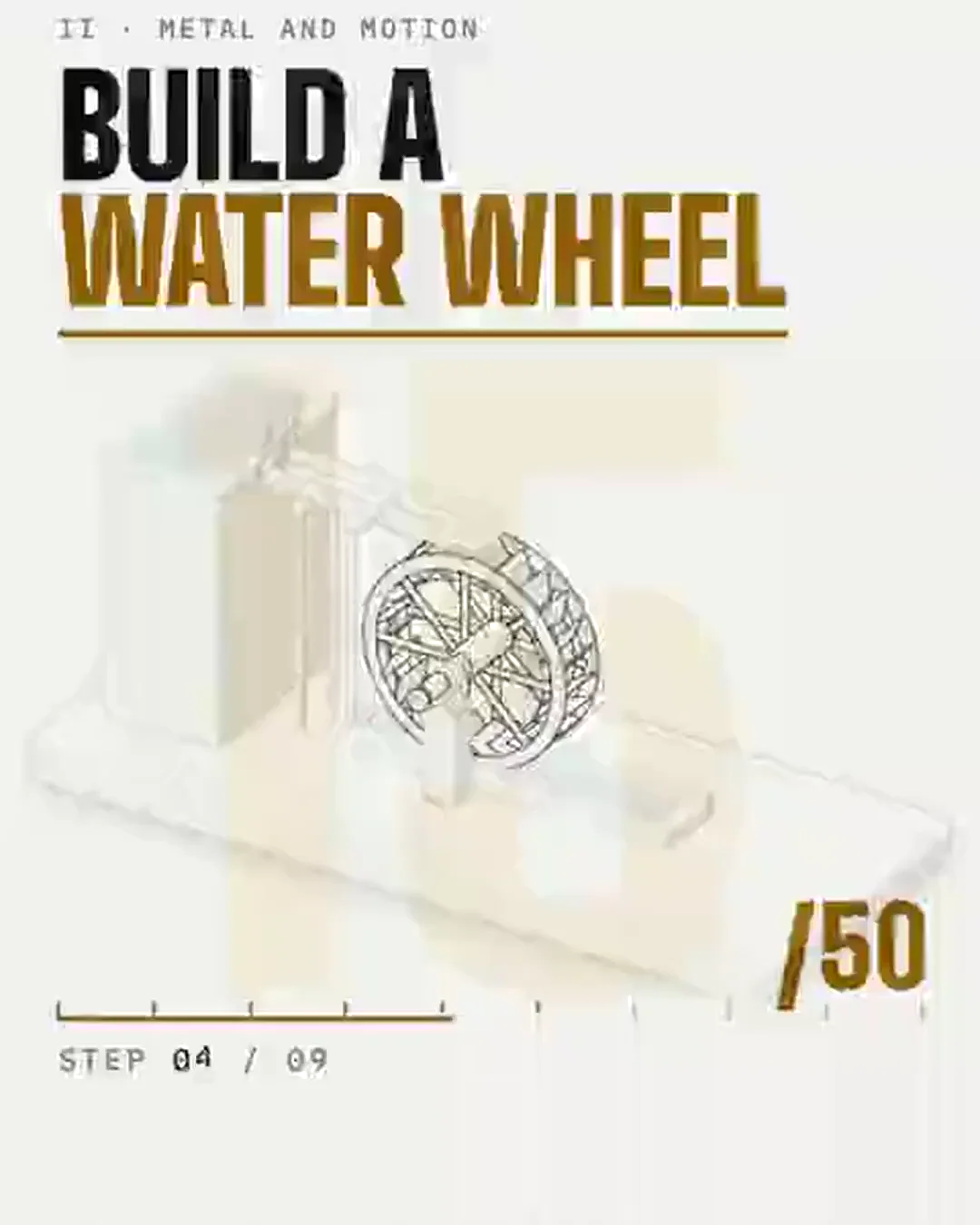
What this step adds; in part B, the hot ironParts already in placeAn overshot wheel 2.2 m across under a 2.5 m head, from the pond's surface to the tailwater. Water power is 9.81 × flow × head (watts, with flow in L/s and head in m), and an overshot wheel keeps about 85% of it (Müller 2004; Wikipedia gives 80–90%). Fully open, 30 L/s gives about 625 W at the axle, the sustained work of 8 labourers at 75 W each. 6 wipers on the axle each press the helve's tail down and lift a 200 kg head 30 cm, 589 J a blow, so blows a minute are 6 × the wheel's rpm. The model assumes all the wheel's output lifts the head and ignores bearing friction, so the wheel settles at 10.6 rpm and 64 blows a minute. An undershot wheel given the same water keeps about 75% at best (Müller 2004) and 46–69% in measured builds: 340–550 W instead of 625. This is a guide to how the parts go together, not engineering drawings: have the pond wall and the wheel's bearings checked before you let water in. A falling 200 kg head and a loaded wheel crush hands: shut the sluice and chock the wheel before reaching in, fence the cams, and wear eye protection against flying scale.