Machine 13Build a metal lathe← → step through the guidecastings · lathe and shaper
Spindle0 rpm
Feed–
Cutting speed–
DiameterØ 40 mm
Change gears20·80·20·100
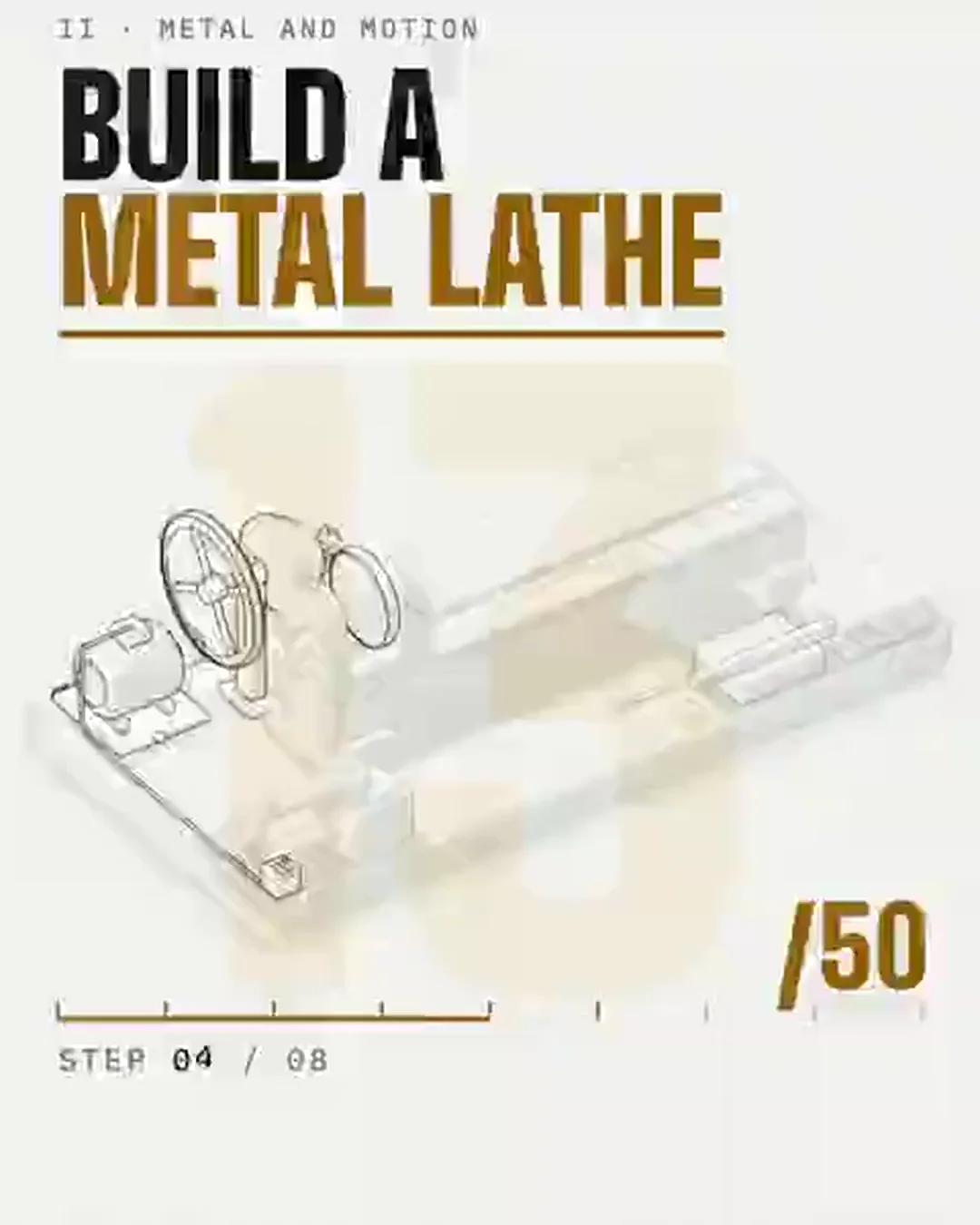
What this step adds; in part B, the cutting edge and the chip it liftsParts already in placeA small lathe of the kind David Gingery's books build from scrap-aluminium castings; his series makes the lathe first "since it can be used to help build itself", then the shaper, milling machine, drill press, dividing head and brake. Maudslay's screw-cutting lathe of about 1800 joined the same three things this one has, leadscrew, slide rest and change gears (Ramsden may have done it in 1775), and flat ways come from three plates scraped against each other in turn, the method credited to Whitworth. Sizes are this guide's own, drawn at 1 unit = 2.5 mm (ten times finer than the plant guides) and from a lower azimuth (35°) and a higher camera (36°) than the other guides, so the headstock end, its gears and the cut face you. A 1,425 rpm motor and a 4:16 countershaft drive opposed 10/8/6 cm and 6/8/10 cm cones, so the spindle runs 214, 356, 594 rpm. Cutting speed is π·d·n: a 40 mm bar at 214 rpm is cut at 26.9 m/min, near the usual 30 m/min for a high-speed-steel tool in mild steel. The 4 mm leadscrew moves the carriage 4 × (20/80) × (20/100) = 0.2 mm a turn for turning, or 4 × 60/40 = 6 mm for a Tr 32 × 6 thread. The model assumes no motor slip under load, no belt slip and a cut of 4 passes; the feed is drawn about 149 times faster than real when turning and 9 times when threading, and the chuck is drawn turning slowly so you can follow the jaws. This is a guide to how the parts go together, not engineering drawings. Tie back long hair, roll up sleeves and take off rings: a lathe catches loose things and pulls them in. Never leave the chuck key in the chuck; wear eye protection, and keep the belt and change gears guarded while it runs.