Machine 35Build an Icyball refrigerator← → step through the guidestand · ring 46 cm up · wick burner
Clock0.0 h
Pressure0 psi
In cold ball0%
Icebox25 °C
Burneroff
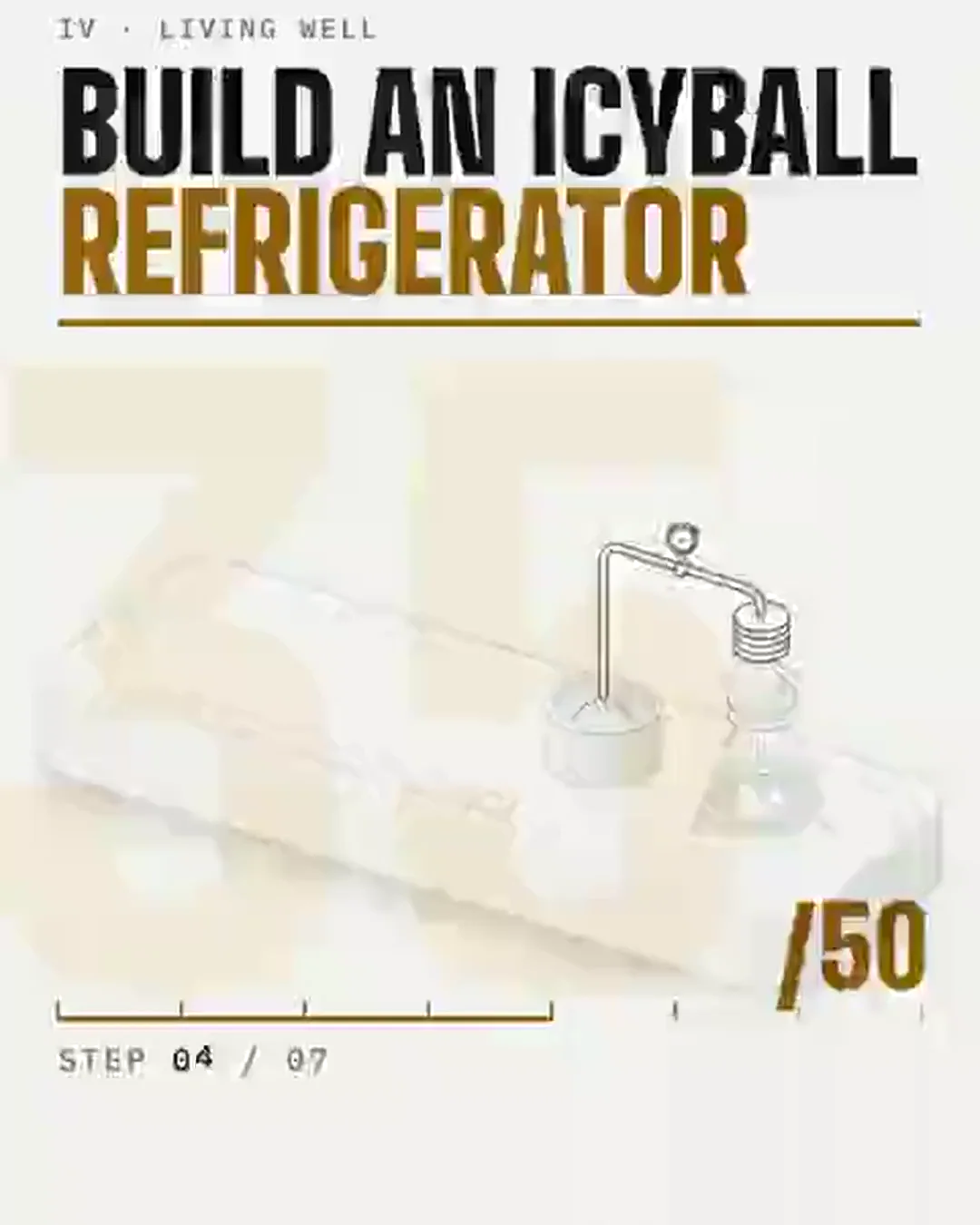
What this step adds; in part B, the flame, then the frostParts already in placeA Crosley-type Icyball: a hot ball of ammonia dissolved in water and an empty cold ball, joined by a sealed inverted U of pipe. Heated gently for about 1.5 h with the cold ball in cool water, the ammonia boils out of the water, the gauge climbs to about 249 psi (1.72 MPa) and the ammonia condenses in the cold ball. Moved to the icebox, the pressure falls, the liquid ammonia boils in the cold ball and frosts it, and the vapour is drawn back into the water in the hot ball: about 24 h of cold, for about a cup of kerosene. The model's own assumptions: the curve to 249 psi is a smooth ramp; the frosted cold ball sits at -5 °C, where ammonia's vapour pressure (NIST Antoine fit) is about 36 psi; the charge boils off evenly; the box air falls from 25 °C toward 5 °C with a 2.5 h time constant. This is a guide to how the parts go together and why it works, not engineering drawings. Ammonia under pressure is dangerous: never improvise the pressure vessel. The balls and pipe must be built and pressure-tested to a code by a qualified welder, and charged by someone trained to handle anhydrous ammonia.