Machine 34Build an ice house← → step through the guidefloor 2.2 × 2.2 m · sump 30 cm
Monthmid Jan
Air−6 °C
Heat in0 W
Meltwater0 L/day
Ice left3.8 t
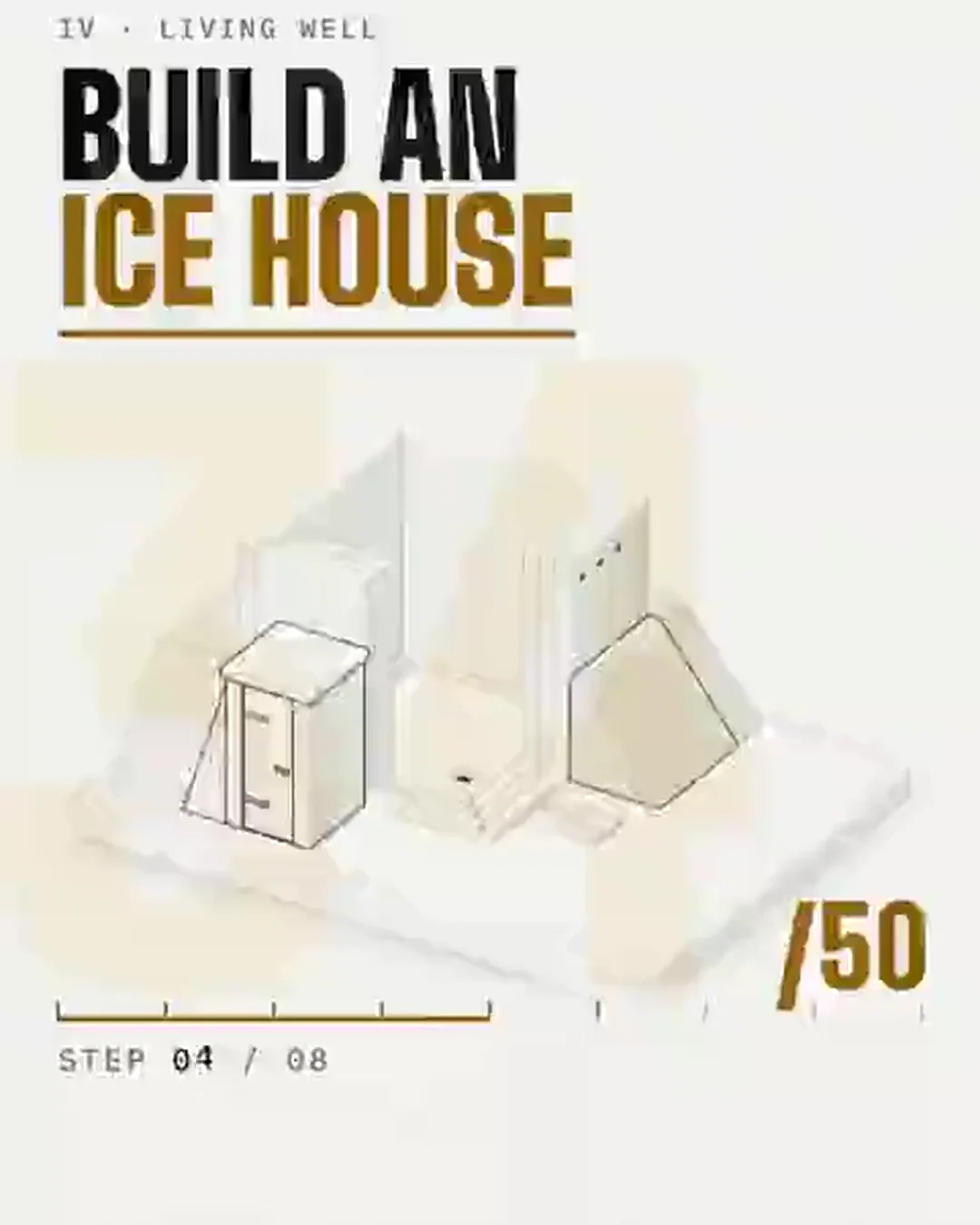
The ice: what this step adds; in part B, the stack as it meltsParts already in placeAn ice house dug into a bank: a 3.5 m square of stone outer wall and brick lining in lime mortar, 20 cm apart with straw between, under a thatched roof. The stack is 6 layers of 40 cm blocks cut from 30 cm pond ice, 1.6 m square and 1.8 m high, about 3.8 t of ice at 917 kg/m³ with 10% sawdust in the joints, packed in 30 cm of sawdust at the sides and floor and 60 cm on top. The model: heat leaks in at q = k·ΔT/d, with k = 0.2 W/m·K, an assumed effective value for damp sawdust with some air leakage (dry sawdust is nearer 0.08), and ΔT the month's mean air temperature above 0 °C, taken from an assumed cold-winter climate (−6 °C in January, 23 °C in July); that is about 15 W/m² through the sides in July. Every 334 kJ that gets in melts 1 kg of ice, which drains to the sump and out to the soak pit. The model ignores the soil's lag, the walls and the ice you take out, and on these assumptions the stack lasts until late August; the sources say pond ice in sawdust usually kept into June, sometimes July or August. This is a guide to how the parts go together, not engineering drawings. Pond ice is only safe to work on when it is thick enough to bear you: test it, never go out alone, and keep a rope and pole on the bank; a deep pit needs a ladder and someone above.