Machine 10Build a scrap metal foundry← → step through the guidesand floor · 2.0 × 0.83 m
Heat0 min
Metal20 °C
Melted0.0 kg
Casting–
Stagecold
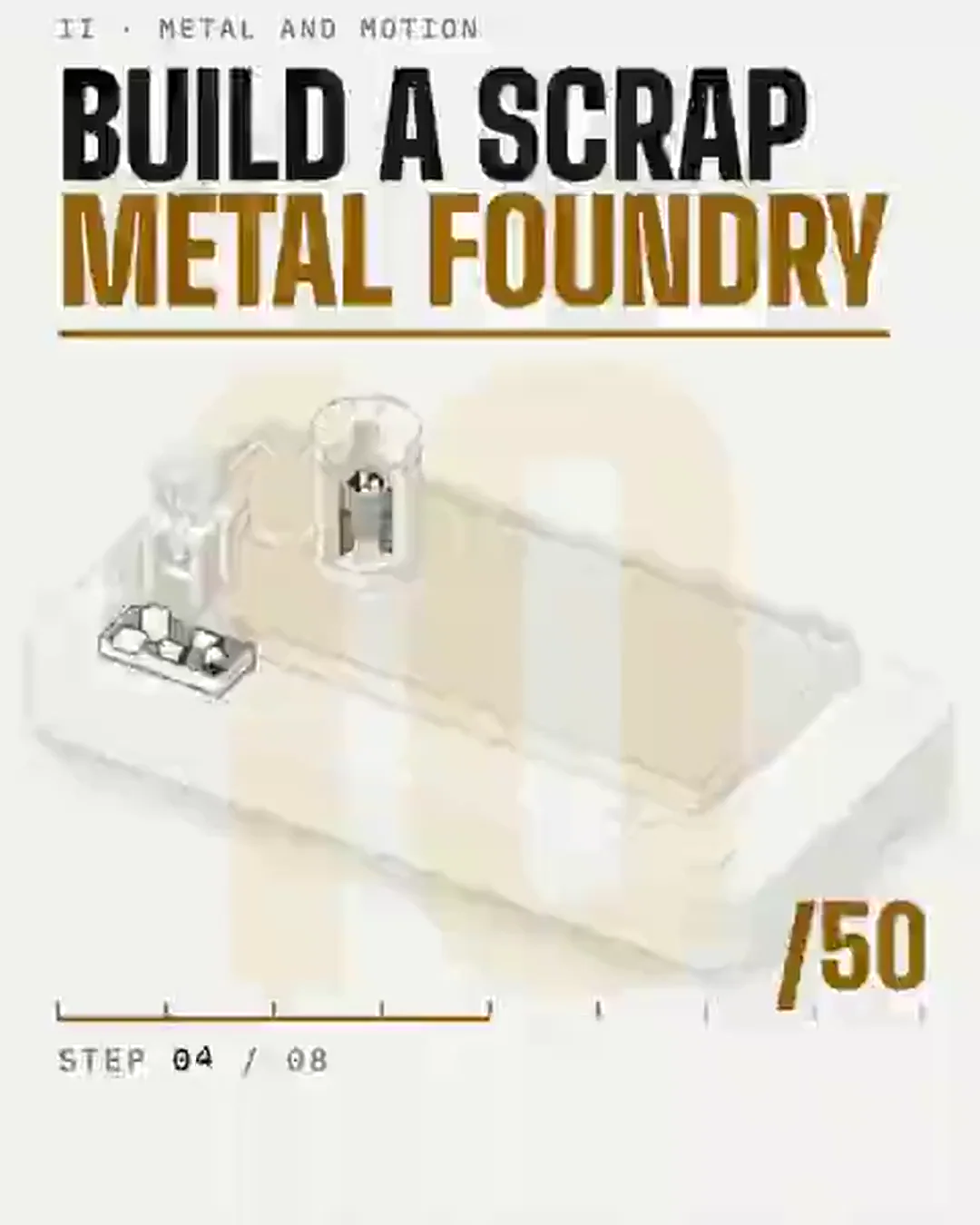
What this step adds; in part B, the heat and the molten metalParts already in placeA Gingery-style charcoal foundry: a 5-gallon steel bucket, Ø 30 cm, lined 5 cm thick to a Ø 20 cm bore, blown through a side tuyere by a hand-cranked fan. Aluminium melts at 660 °C and bronze at about 950 °C. The crucible holds 1.05 L inside; charged to 80% it melts 2 kg of scrap. The heat it needs is mass × (0.90 kJ/kg·K × 640 K + 397 kJ/kg to melt + 1.18 kJ/kg·K × 60 K to pour at 720 °C), about 2,088 kJ. The model assumes 1 kW of the fire reaches the metal, which gives about 35 minutes from lighting to pouring heat, and a casting that cools in the sand with a 10-minute time constant, opened below 200 °C after about 14 minutes. The pulley, Ø 12.5 cm, weighs about 1.2 kg; with its sprue, runner and riser the mould takes 1.5 kg, and the rest goes into the ingot mould. A bucket furnace is small, so this drawing is at about 2.5 times the kiln guide's scale, and seen from 35° up rather than 30° to look into the furnace and the flask. This is a guide to how the parts go together, not engineering drawings. Molten metal and water explode: keep the scrap, tools, moulds and floor bone dry, and pour over dry sand, never over concrete. Wear leather boots, leather gloves and a face shield, and work outdoors, upwind of the fumes.