Machine 50Build a relay computer← → step through the guiderack · 3 decks · 97.5 cm
Number A0000 · 0
Number B0000 · 0
Clock · 5 Hz0 · home
Relays in0 of 12
Sum lamps—
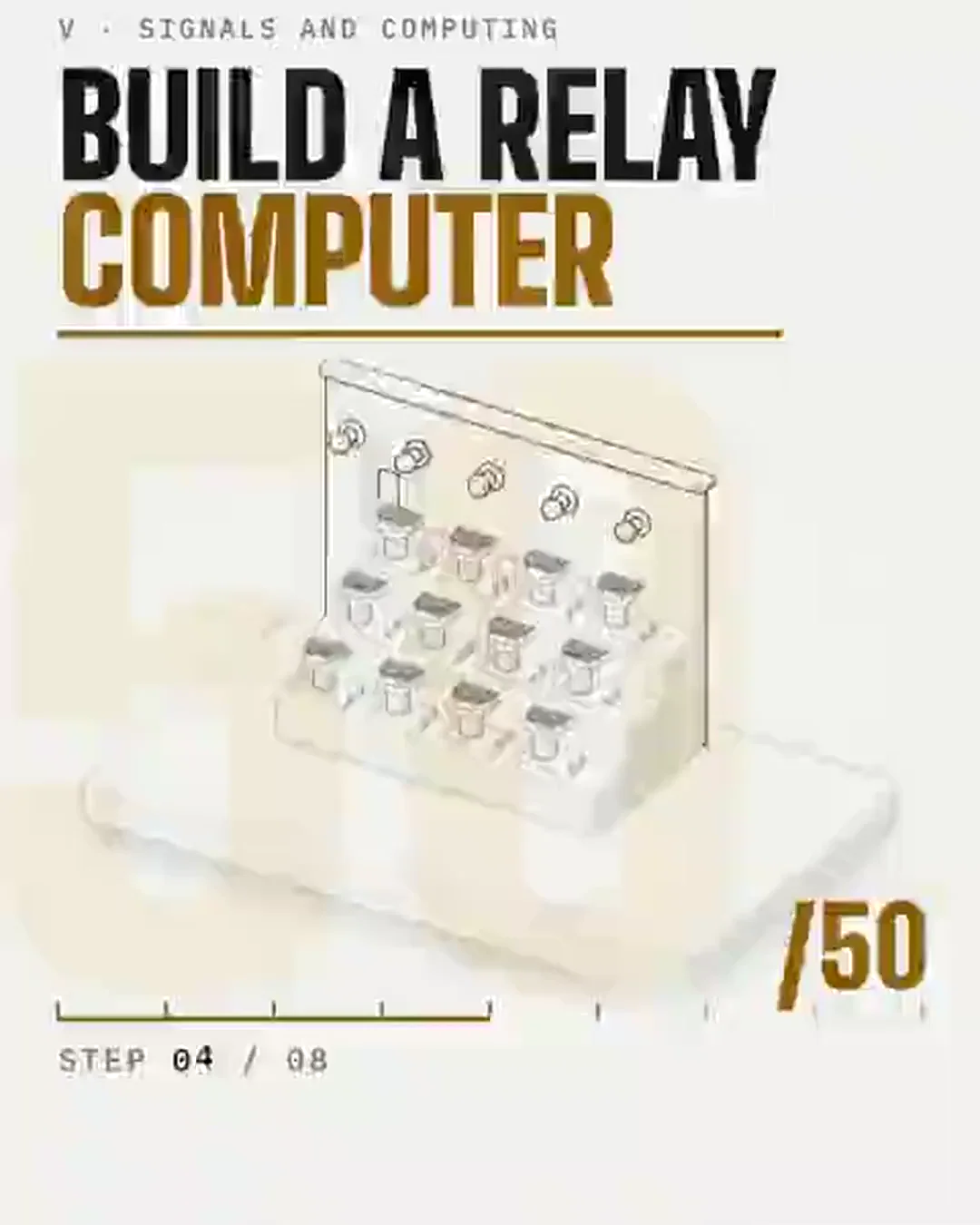
What this step adds; in part B, relays that have pulled in, live wires and lit lampsParts already in placeA 4-bit ripple-carry adder of 12 hand-built 12 V relays, 3 to a bit: an A relay and a B relay copy the toggles, and a carry relay pulls in through contacts on those two and on the carry relay of the bit below, Cout = A·B + (A ⊕ B)·Cin. Each sum lamp is fed through changeover contacts on the same three relays, S = A ⊕ B ⊕ Cin. A stepping switch is the clock: one step reads the toggles, four let the carry ripple up one bit each, and the sixth feeds the lamps, so an addition takes 6 ticks, 1.2 s at 5 Hz. The model lets each relay move only on a clock tick; real relays settle in between. The Zuse Z3 of 1941 did this on a 22-bit word with 2,000–2,600 relays at 5–10 Hz; Harry Porter's hobby relay computer uses 415 relays and still borrows a RAM chip for its memory. This is a guide to how the parts go together, not engineering drawings. 12 V is safe to touch, but a shorted lead-acid battery can melt wire and start a fire: fuse the battery lead, and keep the acid off skin and eyes.