Machine 19Build a hydraulic ram pump← → step through the guidesite · fall 1.2 m · lift 7.3 m
Beats0 /min
Supply0 L/min
Fall1.2 m
Lift7.3 m
Each beat0 L
Delivered0 L/day
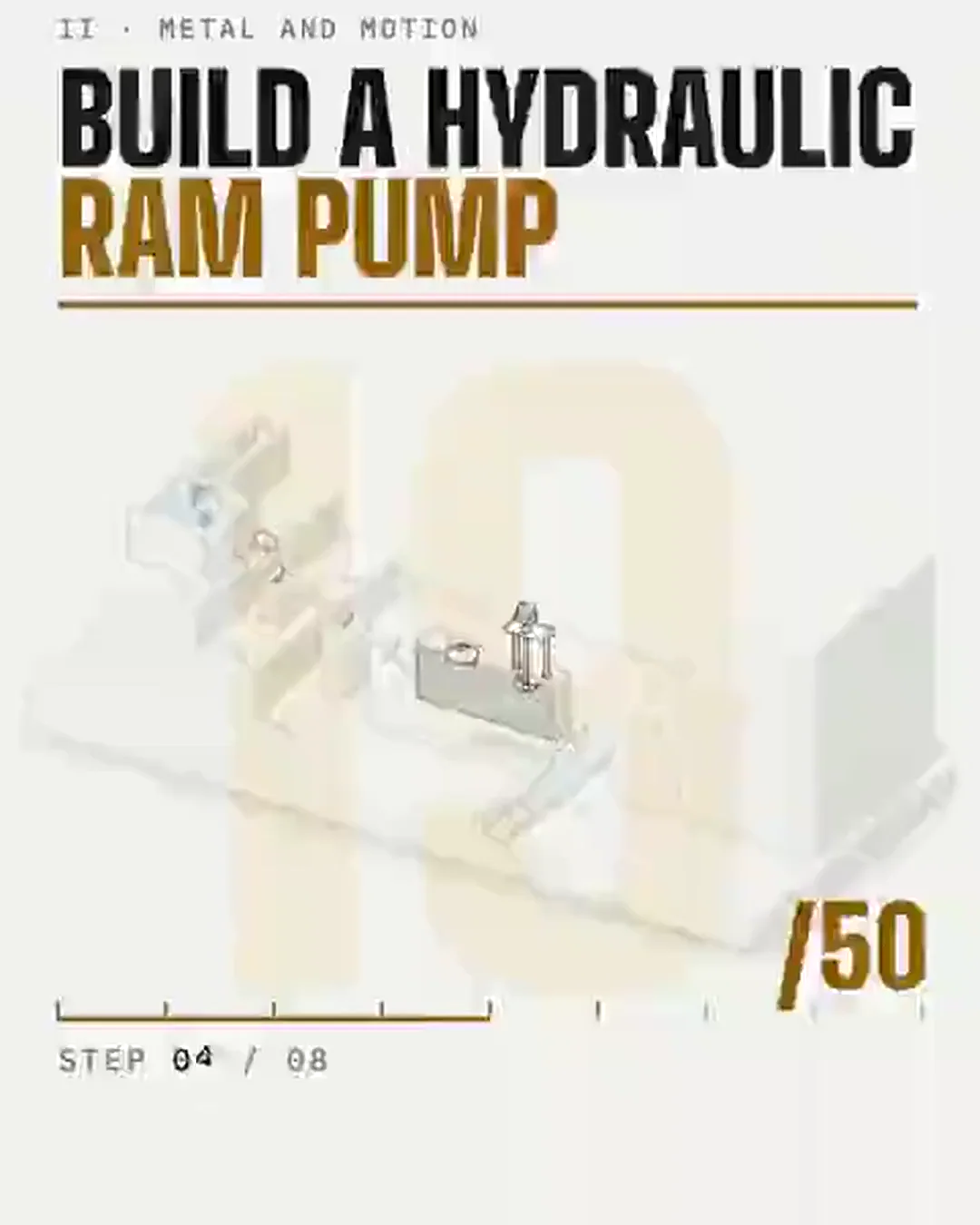
What this step adds; in part B, the pressure surgeParts already in placeA hydraulic ram uses the momentum of falling water to pump part of it far higher. Water speeds up down the drive pipe and out of the open waste valve until the flow drags the clack shut; the sudden stop raises the pressure, which pushes water past the check valve into the air chamber, squeezing the trapped air; the check valve closes, the flow recoils, the waste valve drops open and the beat repeats, 30–100 times a minute (Practical Action, via SSWM). The squeezed air keeps water moving up the delivery pipe between beats, and the snifter lets in a little air on each recoil to replace what dissolves. Delivery is q = η · Q · Hs / Hd (NC State Extension). The numbers are its worked example: 76 L/min (20 US gal/min) from the supply, a 1.22 m fall, a 7.32 m lift and η = 0.6, which gives 7.6 L/min, about 10,901 L a day. The model takes η as fixed at 0.6; quoted rams run at about 0.5–0.7, which would give 9100–12700 L a day here, and it does not let the beat rate change η, so tuning the beat only changes how much each beat sends. Practical Action's efficiency tables could not be read, so no lift-ratio limit is shown. The ram and its pipes are drawn at 1 unit = 1 cm with the body cut in half; the hillside is shortened, so the 1.2 m fall and the 7.3 m lift are not to scale, and the drive pipe, really several metres long, is drawn short. The beat runs at its true rate. This is a guide to how the parts go together, not engineering drawings. Secure the drive pipe: every beat sends a strong pressure surge back along it, so anchor it at each pier and at the ram, never use plastic or flexible hose for it, and keep hands clear of the waste valve while it beats.