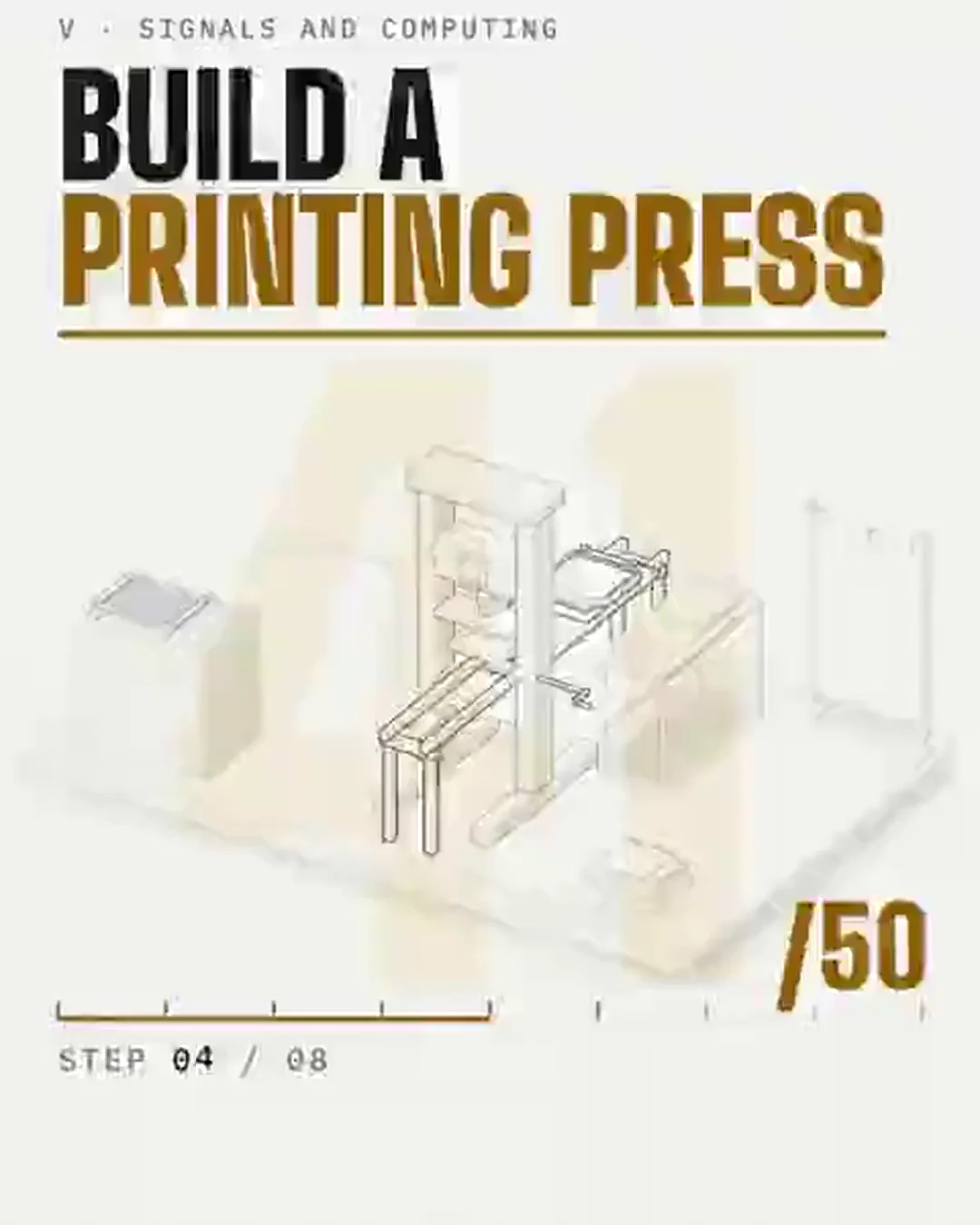
Machine 41Build a printing press← → step through the guidevat · mould 54 × 40 cm
Doingidle
Per sheet–
Rate–
Printed0
Press time0:00
What this step adds; in part B, the ink and the printed sheetParts already in placeA wooden common press, drawn at 1 unit = 1 cm rather than the series' 2.5 cm so the type and the sheets can be read: 2.06 m to the top of the cap, a sheet 46 × 34 cm. Joseph Moxon (1684) set the pay standard at 250 sheets an hour, printed on one side, by two pressmen: 14.4 s a sheet. Fatigue probably held the real rate nearer 200 (18.0 s). The often-repeated 3,600 pages a day has no source, so it is not used here. The platen covers half the forme, so each sheet takes 2 pulls, a quarter turn of the bar each. The model splits the cycle into its moves by guesswork, with the beater inking while the puller lays the next sheet; only the total time comes from Moxon. The cycle is drawn 2.5 times faster than real time, the counter and press clock count real seconds, and the heaps are drawn at 0.1 mm a sheet. Type metal is about 50–86% lead, 11–30% antimony and 3–20% tin; a classroom iron-gall ink is 90 g galls, 60 g iron sulfate and 30 g gum arabic in 400 mL water. This is a guide to how the parts go together, not engineering drawings. Type metal is mostly lead: melt it outdoors, keep food, drink and children away, and wash your hands after setting type.